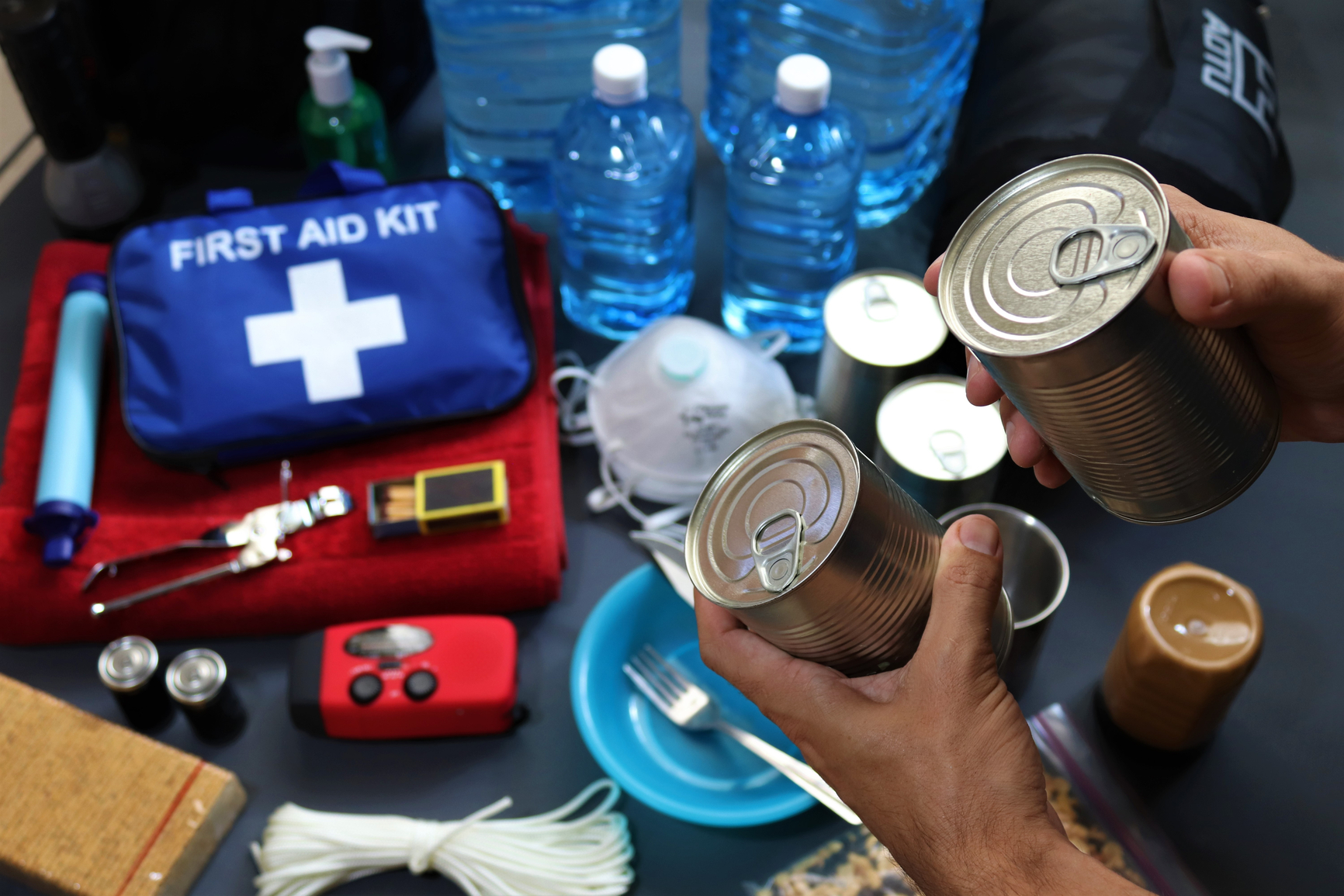
The British government has issued advice to encourage households to “Be Ready” in case severe weather or cyberattacks disrupt services to power, water, or the internet.
People have been advised to prepare for three days – in the expectation that 72 hours would allow time for support to reach those in need.
On hearing the advice, many Brits were quick to act. The BBC reported that “sales of essential goods such as bottled water and canned food soared in the 10 days following the launch”.
The British “Be Ready” checklist includes essential provisions, medical supplies, cash, and ID
The checklist of what British households should have ready in case of disruption includes:
- Bottled water to drink and potentially more for tasks such as cooking and washing
- Non-perishable food that doesn’t need refrigeration or cooking. Helpfully, guidelines recommend “it’s best to buy food you’d usually eat”
- Hygiene products, including hand sanitiser, wet wipes, and bathroom products
- Torch, blankets, sleeping bags, and warm clothes
- Wind-up or battery-powered FM radio
- Money and documents, including cash and cards, copies of IDs, and important phone numbers
- First aid kit, baby products, and pet supplies.
In all cases, people are expected to stockpile supplies to cover three days’ isolation.
Britain’s “Be Ready” checklist is fairly standard, but other countries are recommending higher levels of preparedness.
Here’s how it compares to the US, EU, and Canada.
US citizens are encouraged to have a battery-powered radio, a manual can opener, and a whistle
The US government website dedicated to readiness covers flooding – the most common US disaster – as well as other severe weather events, hurricanes, and power outages.
The emergency kit recommended for citizens includes practical advice on how to store items. And there’s a greater emphasis on the practicalities. For example, as well as enough food and water, the basic checklist features:
- Flashlight
- Extra batteries
- Whistle (to signal for help)
- Plastic sheeting, scissors, and duct tape (to shelter in place)
- Wrench or pliers (to turn off utilities)
- Manual can opener (for food)
- Local maps.
The website also includes guidance and checklists for numerous other events. At the time of writing (November 2026), there was even a page dedicated to steps for staying safe during the FIFA World Cup 2026, which took place during the summer!
EU guidelines encourage citizens to make preparedness part of everyday life
The EU is taking preparedness seriously. The European Commission plans to launch an annual EU Preparedness Day, to be held on 23 October – with the first to occur in October 2027.
As well as encouraging EU citizens to take an active part in preparing for emergencies to protect themselves and others, the annual event will be used to recognise the efforts and work of all those involved in strengthening Europe’s preparedness.
While recommendations vary between countries, advice covers four core areas:
- 72-hour self-sufficiency – encouraging people to meet their essential needs during the first three days of an emergency.
- Preparedness education – integrating preparedness into school lessons, helping children develop preparedness skills from an early age.
- Disability-inclusive preparedness – supporting inclusive measures so people with disabilities aren’t left behind.
- Communicating risks and threats – helping authorities communicate risks and threats effectively.
One key recommendation that applies to all is to prepare a bit at a time, making preparedness part of everyday life and a normal habit rather than a one-off effort.
In Canada, geography dictates how long households should plan to rely on emergency supplies
While Canadians used to consider summertime the emergency season, with floods and fires, winter ice storms can also cause disruption. Plus, as with everywhere else, cybersecurity threats are a growing part of the need to be prepared for an emergency.
As with other geographies, the base recommendation is to have enough emergency supplies for 72 hours.
However, the length of time families might need to rely on their emergency supplies will depend on their location. Since restoring electricity or getting help to far-flung geographies could take longer, those living in more remote communities are encouraged to plan for up to 14 days.
The key takeaway for Canadian residents is that preparedness shouldn’t be treated as a one-size-fits-all checklist. Rather, they need to account for where they live, the risks in their community, and the needs of everyone in their household.
Canada’s standard emergency supply list includes:
- Non-perishable, easy-to-prep food
- Cash, in case electronic payment systems are unavailable
- Copies of important documents, including identification, insurance information, and prescriptions
- A portable radio to receive emergency information if internet or cell phone services are disrupted.
Advice also recommends that families with children pack colouring books, games, and non-digital activities to keep them occupied.